Source Non Stick Stainless Steel Cookware Set for Home, Hotel, and Catering
Explore 30 options for a non stick stainless steel cookware set designed for various kitchen needs. Compare models with glass or stainless lids, induction-compatible bottoms, and customizable packaging. Verify material grades like 201ss and certifications such as FDA and LFGB to ensure quality for your sourcing requirements.
Key considerations
Products List




Comprehensive Sourcing Guide
Non Stick Stainless Steel Cookware Set Sourcing Guide
Buyers evaluating this category must distinguish between true non-stick coatings and stainless steel sets with induction-compatible bases. The observed product data indicates a mix of "Non-Stick" style attributes alongside "Stainless Steel" body materials, suggesting some items may feature a specific coating or surface treatment rather than bare steel. Procurement teams should verify if the "Non-Stick" claim refers to a PTFE-based layer or a specialized surface finish, as this dictates the cooking method and durability expectations for the final product.
Commercial listings reveal a wide price variance from $2.9 to $48, driven by set composition and material grade. The data shows specific models like the 13-piece and 12-piece sets constructed from 201 stainless steel, which is a cost-effective alloy often used in entry-level to mid-range cookware. Buyers must align their budget with the specific material grade and piece count, ensuring that the lower price points do not compromise the structural integrity required for commercial or heavy residential use.
Product Scope and Observed Listing Signals
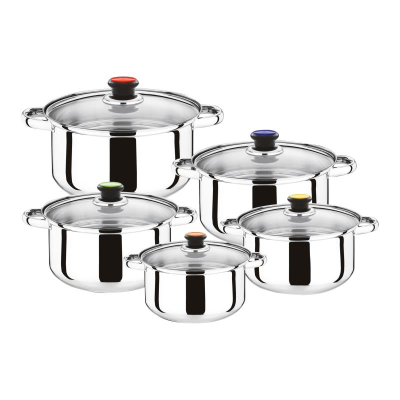
The market offers diverse configurations ranging from 10-piece to 13-piece sets, with standard diameters spanning from 16cm to 34cm. Observed specifications include models with glass lids, stainless steel lids, or a combination of both, allowing buyers to select based on visibility preferences and heat retention needs. The "General" applicable range suggests these sets are designed for versatile kitchen environments, though the specific "Gas-Oven" stove compatibility noted in some listings requires careful verification against the intended cooking surface.
Packaging and customization options vary significantly, with some suppliers offering color boxes and others providing sea freight packing for bulk orders. The presence of "Ss Hollow" handles and satin or mirror polish finishes indicates a focus on ergonomic design and aesthetic appeal. Procurement teams should confirm whether the "Customized Color Box" option is available for branding purposes, as this can be a critical differentiator for private label strategies in the retail sector.
Technical Specifications to Verify
Material composition is the primary technical differentiator, with 201 stainless steel being a documented standard for several listed sets. Buyers must verify if the "Induction Bottom" feature is a clad layer or a bonded disc, as this directly impacts heating efficiency on electric and induction stoves. The observed dimensions, such as φ 240× 140× 1.0mm or φ 320× H190× 0.8mm, provide a baseline for wall thickness and volume, which are critical for determining heat distribution and food capacity.
Handle construction and lid types require specific attention to ensure user safety and long-term usability. The data highlights "With Handle" and "Ss Hollow" configurations, which are designed to stay cool during cooking, but the exact thermal conductivity of the handle material must be confirmed. Additionally, the distinction between glass and stainless steel lids affects moisture retention and visibility, requiring buyers to match the lid type to their specific culinary applications and cleaning protocols.
Compliance and Safety Documentation
Food contact safety is paramount, and the observed listings explicitly mention FDA and LFGB certifications. These standards ensure that the materials used in the cookware body, lids, and any non-stick coatings do not leach harmful substances into food under normal cooking conditions. Buyers should request current test reports for these certifications to verify that the specific production batch meets the required safety thresholds, rather than relying solely on the supplier's general claim.
Beyond food safety, the manufacturing process and finish quality must align with international trade standards. The "Satin/Mirror Polish" finish not only affects aesthetics but also influences the ease of cleaning and resistance to scratching. Procurement teams should ensure that the supplier can provide documentation confirming that the polishing process does not introduce contaminants and that the final product meets the hygiene standards required for export to regulated markets like the European Union and North America.
Cost Drivers and Commercial Terms
Pricing is heavily influenced by the piece count, material grade, and packaging complexity. The observed MOQ range of 8 to 13,500 units suggests flexibility for both small startups and large distributors, but the unit cost will fluctuate significantly based on volume. Buyers must analyze the cost per piece within a set, as a 13-piece set may offer better value than a 10-piece set depending on the inclusion of essential items like stock pots or specialized pans.
Lead times and payment terms are critical variables in the supply chain planning process. The data indicates a standard lead time of 60 days after deposit, which requires buyers to plan inventory orders well in advance to avoid stockouts. Additionally, the "Customized Color Box" option may incur additional tooling or setup costs, so procurement teams should negotiate these fees upfront to ensure the total landed cost remains within the target budget.
Supplier Qualification and Quality Control
Supplier reliability is often reflected in their ability to meet specific model numbers and standard dimensions consistently. The extensive list of model codes, such as R-2036, HJ-1002, and R-7042, suggests a mature manufacturing base with established production lines. Buyers should verify that the supplier has a robust quality control system in place to ensure that every unit matches the specified dimensions and material properties, minimizing the risk of receiving substandard goods.
Quality control should extend to the finishing processes and assembly of handles and lids. Since the products feature "Ss Hollow" handles and various lid types, the assembly process must be precise to prevent loosening or detachment during use. Buyers are advised to request pre-shipment inspection reports that specifically test the structural integrity of the handles and the fit of the lids, ensuring that the final product performs reliably under high-heat conditions.
Long-Term Procurement Checks
Sustainability and supply chain resilience are key considerations for long-term partnerships. The "by Sea" packing method indicates a focus on bulk logistics, which requires buyers to assess the supplier's ability to maintain consistent quality over multiple shipping cycles. Regular audits of the production facility can help ensure that the 201 stainless steel and other materials remain consistent, preventing quality drift that could damage the buyer's brand reputation.
Continuous monitoring of market trends and certification updates is essential for maintaining compliance. As regulations regarding non-stick coatings and food contact materials evolve, suppliers must adapt their production processes accordingly. Buyers should establish a protocol for periodic re-verification of FDA and LFGB status, ensuring that the supplier remains compliant with the latest international safety standards and can provide updated documentation upon request.
FAQs
What materials are used in these stainless steel cookware sets?
The cookware sets are primarily constructed from 201 stainless steel bodies. This material choice ensures durability and resistance to corrosion during daily kitchen use. The sets include various pot sizes ranging from 16cm to 34cm, providing versatile options for different cooking needs. The material quality supports both aesthetic appeal and functional performance for home and commercial kitchens.
Can these cookware sets be used on induction stoves?
Yes, many of the available sets feature induction bottoms, making them compatible with induction stoves. This design allows for efficient heat transfer and even cooking across various heat sources. The sets are generally suitable for general stove types, ensuring versatility in the kitchen. Buyers should verify specific model compatibility to ensure optimal performance with their existing kitchen appliances.
What certifications do these stainless steel cookware sets hold?
The products hold FDA and LFGB certifications, ensuring they meet strict safety and quality standards for food contact. These certifications guarantee that the materials used are safe for culinary applications. Buyers can trust the compliance of these sets for international markets. The certifications provide assurance regarding the material integrity and safety standards met by the manufacturer during production.
What is the minimum order quantity for these cookware sets?
The minimum order quantity varies by product model, ranging from 8 to 13,500 pieces. Specific models may have higher MOQs, such as 1,000 pieces for certain sets. Buyers should check the specific model requirements to determine the exact MOQ. This flexibility allows for both small trial orders and large bulk purchases depending on the buyer's inventory needs.
How long is the lead time for production?
The standard lead time is 60 days after receiving the deposit. This timeframe allows for proper manufacturing and quality control processes. Buyers should plan their inventory accordingly to account for this production duration. The lead time ensures that each set meets the required specifications and quality standards before shipment to the destination market.
Are custom packaging options available for these cookware sets?
Yes, customized color box packaging is available for these cookware sets. Buyers can choose from options like color boxes and cartons to suit their branding needs. This customization allows for better product presentation and protection during transit. The packaging options help enhance the market appeal of the products for retail distribution.
What types of lids are included in these sets?
The sets include various lid options, such as glass lids and stainless steel lids. Some models feature glass lids for monitoring cooking progress, while others use stainless steel lids for durability. The choice of lid depends on the specific product model. These options provide versatility for different cooking styles and user preferences in the kitchen environment.